Exploring Quantum Strategies in Dynamic Adversarial Environments
My research studies how teams can continue to coordinate when communication is limited, information is incomplete, and the environment is changing. I use quantum game theory to investigate whether quantum resources can enable more resilient coordination in settings where classical models break down, including adversarial and nonstationary systems. At Florida State University, I am developing the foundations of Dynamic Quantum Markov Games for these high-uncertainty environments.
About Me
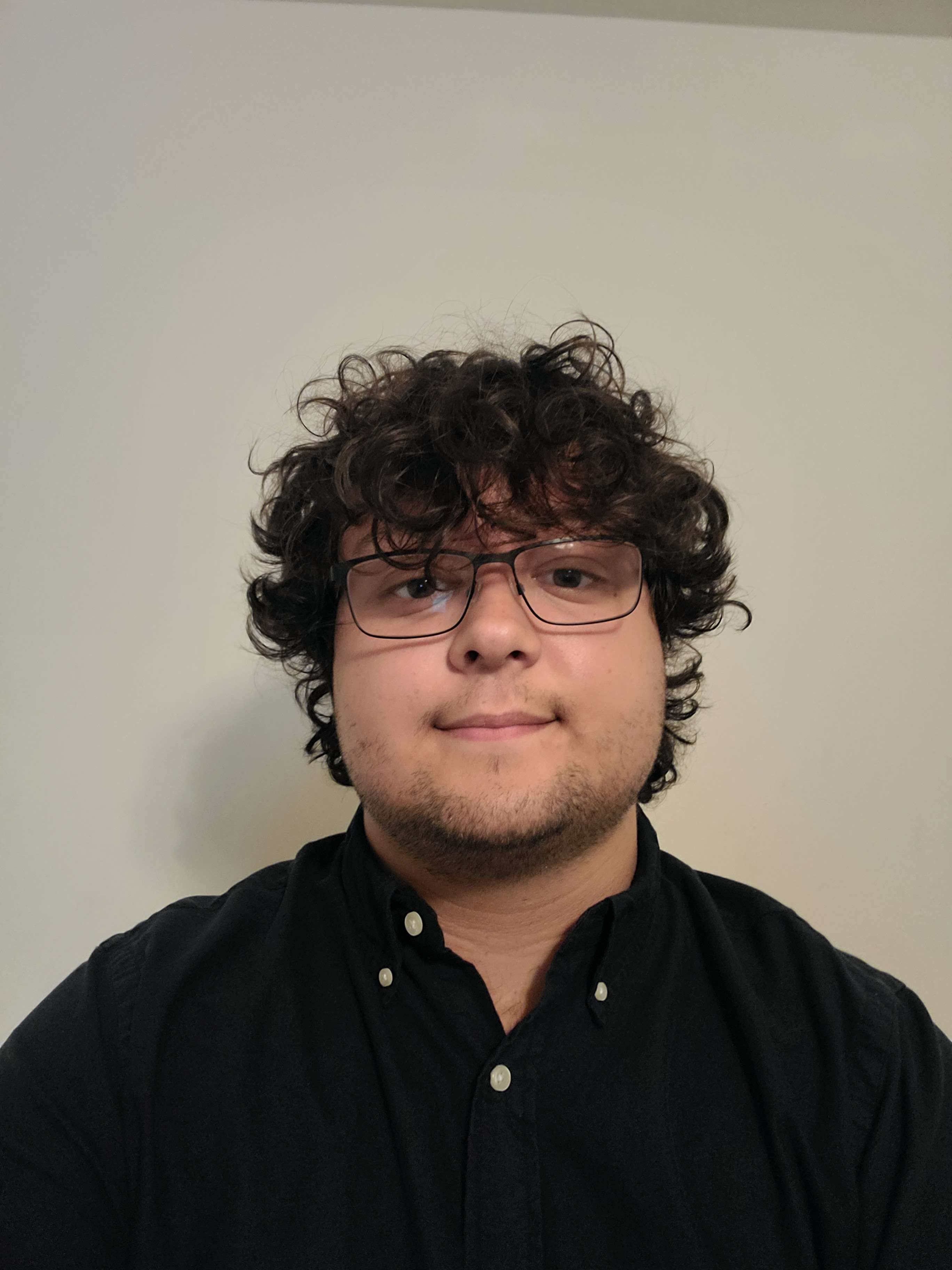
I am a PhD student in Industrial Engineering at Florida State University studying quantum game theory, multi-agent decision-making, and resilient coordination under uncertainty. My research asks how teams can continue functioning when communication degrades, information is incomplete, and the environment changes faster than classical coordination models can adapt.
My background spans computer science, economics, and engineering. Since arriving at FSU, I have worked across research and industry settings, including machine learning for sports analytics, software engineering, and quantum computing. That interdisciplinary path shapes how I approach research: I am interested in mathematically rigorous ideas that can also inform real-world systems.
Current Research
Quantum Game Theory In Dynamic Adversarial Environments
My doctoral research focuses on team coordination in dynamic, adversarial, and communication-constrained environments. Many classical game-theoretic models assume fixed players, stable payoffs, and enough communication to negotiate effective behavior. But in real systems, teams often face changing objectives, degraded links, incomplete information, and even the loss of key members. I study this harder regime and ask when coordination can still remain stable.
To address this, I am developing a Dynamic Quantum Markov Games framework that connects quantum information with dynamic game theory. The goal is to understand whether quantum resources such as entanglement can support new forms of coordination when classical methods become brittle. My work draws on System III team dynamics, nonlocal games, adaptive adversaries, and belief-updating under uncertainty, with long-term applications to distributed decision-making and resilient autonomous systems.
I am particularly interested in settings where heterogeneous agents must coordinate with limited communication while adapting to changing conditions and adversarial disruption. My proposed framework combines dynamic game-theoretic reasoning with quantum coordination mechanisms, including zero-communication correlation, state-dependent adaptation, and graceful degradation under member loss.
Featured Projects
View All Projects →Dynamic Tackler ID System
Machine LearningAI system using CNNs to predict the most likely tackler in NFL plays, processing real-time player positioning data with significant improvements in tactical analysis accuracy.
Quantum Chess
Quantum ComputingPython-based chess engine integrating quantum mechanics principles, allowing players to perform quantum moves such as superposition and entanglement for a unique educational chess experience.
Quantum Nash Equilibrium Solver (WIP)
Quantum ComputingPython package for experimenting with quantum strategies in game-theoretic scenarios, built with Qikist.
Get in Touch
I'm always interested in discussing research collaborations, quantum computing applications, or innovative approaches to complex optimization problems. Whether you're a fellow researcher, industry professional, or simply curious about my work, I'd love to hear from you.